News
Binaural sound generator for Android mobile phones.
Free trial available.
Apply now
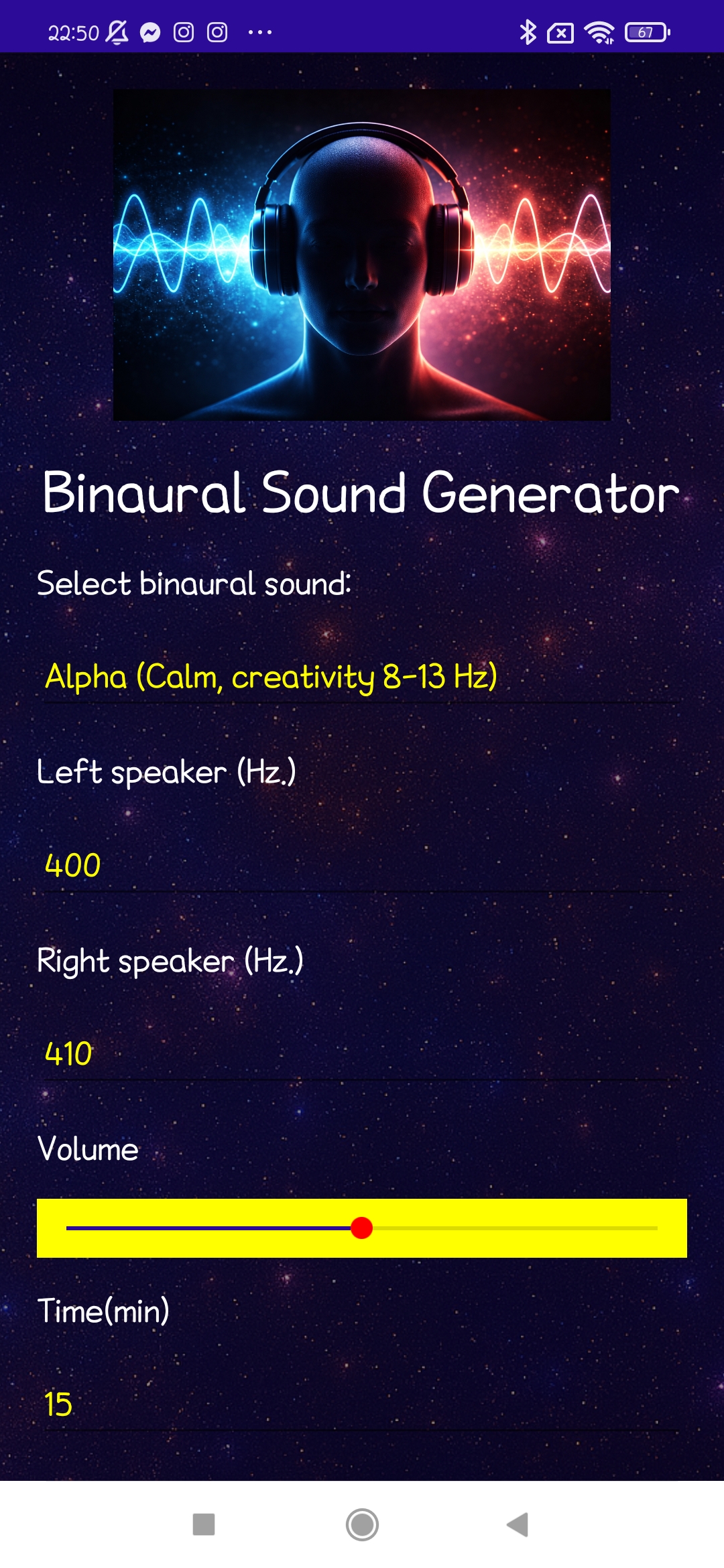
2026. Sirius Biofeedback software update available!
1. Software update includes generation of Binaural (beat) frequencies.
2. Add ETDFL frequency list to the database.
2024. Sirius Bioresonance software update available!
The software can send the frequencies to the DDS BOX via the USB port.
This significantly increases the usable frequency range.

The new Bioresonance and Biofeedback software is available.
New software versions are available at half price for previous Sirius software owners.
Free Spike protein Zapper
Coronavirus_SARS - frequencies:
9918, 9740, 4959, 4870, 2479.5, 2435, 1394.7, 1369.6, 1239.7, 1217.5, 774.8, 760.9, 619.9, 608.7, 464.9, 456.5, 309.9, 304.4, 155, 152.2Hz.
User login
Who's online
There are currently 0 users online.
Binaural Frequencies
Introduction to Binaural Frequencies (Binaural Beats)
Binaural frequencies, commonly known as binaural beats, are an auditory phenomenon that occurs when two slightly different sound frequencies are presented separately to each ear using stereo headphones. Instead of hearing two distinct tones, the brain perceives a third, rhythmic pulse corresponding to the frequency difference between the two signals.
For example, if a 210 Hz tone is played in one ear and a 200 Hz tone in the other, the brain may perceive a binaural beat at 10 Hz.
How Binaural Frequencies Are Perceived
Binaural beats are not physically present in the external sound signal. Rather, they are created internally by the brain as part of its auditory processing mechanism. This effect arises from neural activity in the brainstem, where auditory signals from both ears are integrated.
Because this phenomenon relies on stereo perception, the use of headphones is generally required for binaural frequencies to be experienced effectively.
Relationship to Brainwave Activity
Brain activity is often categorized into different frequency bands, commonly referred to as brainwaves:
-
Delta (0.5–4 Hz) – associated with deep sleep states
-
Theta (4–8 Hz) – linked to deep relaxation, meditation, and creativity
-
Alpha (8–12 Hz) – related to calm awareness and relaxed focus
-
Beta (12–30 Hz) – connected to active thinking and concentration
-
Gamma (30+ Hz) – associated with high-level cognitive processing
Binaural frequency stimulation is based on the hypothesis that exposure to certain frequency differences may influence or entrain brainwave activity toward corresponding frequency ranges. This concept is often referred to as frequency following or neural entrainment.
Use in Frequency-Based and Energetic Systems
Binaural frequencies are commonly integrated into frequency-based and energetic systems as a non-invasive audio method. They are often used in relaxation programs, meditation environments, and experimental biofeedback or wellness applications.
In such systems, binaural frequencies may be combined with other frequency generation methods to support states of focus, relaxation, or mental balance, depending on the intended application.
Technical Characteristics
-
Requires stereo audio output and headphones
-
Uses two continuous tones with a small frequency difference
-
The perceived beat frequency typically ranges between 1–40 Hz
-
Can be generated using standard audio hardware and software
Important Notice
Binaural frequencies are not a medical treatment and are not intended to diagnose, treat, cure, or prevent any medical condition.
Their effects may vary between individuals and are influenced by factors such as listening environment, duration, and personal sensitivity.
