

Home
Introduction to Bioresonance Systems
Bioresonance theory is based on the concept that all matter—including human tissues, organs, and energetic systems—exhibits characteristic vibrational patterns. According to this approach, these frequency ranges can be examined, compared, and energetically harmonized using various frequency-based methods.
Bioresonance systems typically generate, transmit, or measure frequencies and use this information to perform analyses or provide energetic feedback, often referred to as biofeedback.
Historical Background: The Research of Dr. Royal Raymond Rife
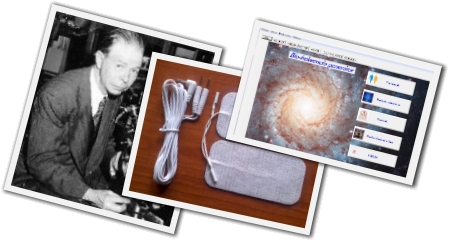
Dr. Royal Raymond Rife became known through his frequency-related research conducted in the 1920s and 1930s. His work was centered on the hypothesis that specific frequencies might interact with microorganisms or other biological structures.
To explore this idea, Rife developed advanced optical microscopes and frequency generators to support his experimental theories. Although his research remains controversial and is not accepted by mainstream scientific medicine, it represents an early historical reference point for frequency-based technologies and continues to inspire many modern bioresonance concepts.
Overview of the Sirius Bioresonance–Biofeedback Software
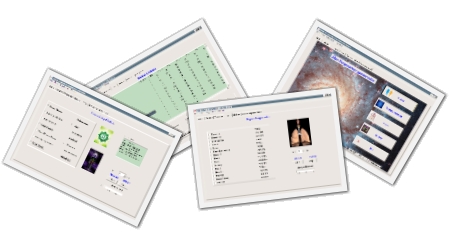
This software platform has been developed to present a bioresonance–biofeedback system inspired by the frequency experiments of Dr. Royal Raymond Rife.
Its primary goal is to provide users with an intuitive, flexible, and expandable interface for frequency testing, frequency generation, and energetic analysis.
International Frequency Database (CAFL)
The software includes access to the CAFL international frequency collection, which contains several hundred frequency sets organized by different thematic categories.
These frequency values are provided for informational and experimental purposes only and are derived from resonance data commonly used in bioresonance-oriented systems.
System Operation and Hardware Requirements
By default, the software does not require dedicated external hardware, as it can operate using the computer’s built-in sound card for frequency generation.
In sound card mode:
-
Any low-power audio amplifier can be selected to amplify the signal.
-
Frequencies may be transmitted using TENS electrodes or other compatible output devices.
The operational frequency range inspired by Dr. Rife’s work spans from 1 Hz to 20,000 Hz. Typically, a single frequency runs for approximately 3 minutes, while treatment or test programs may consist of consecutive frequency sequences.
Extended Energetic Frequency Libraries
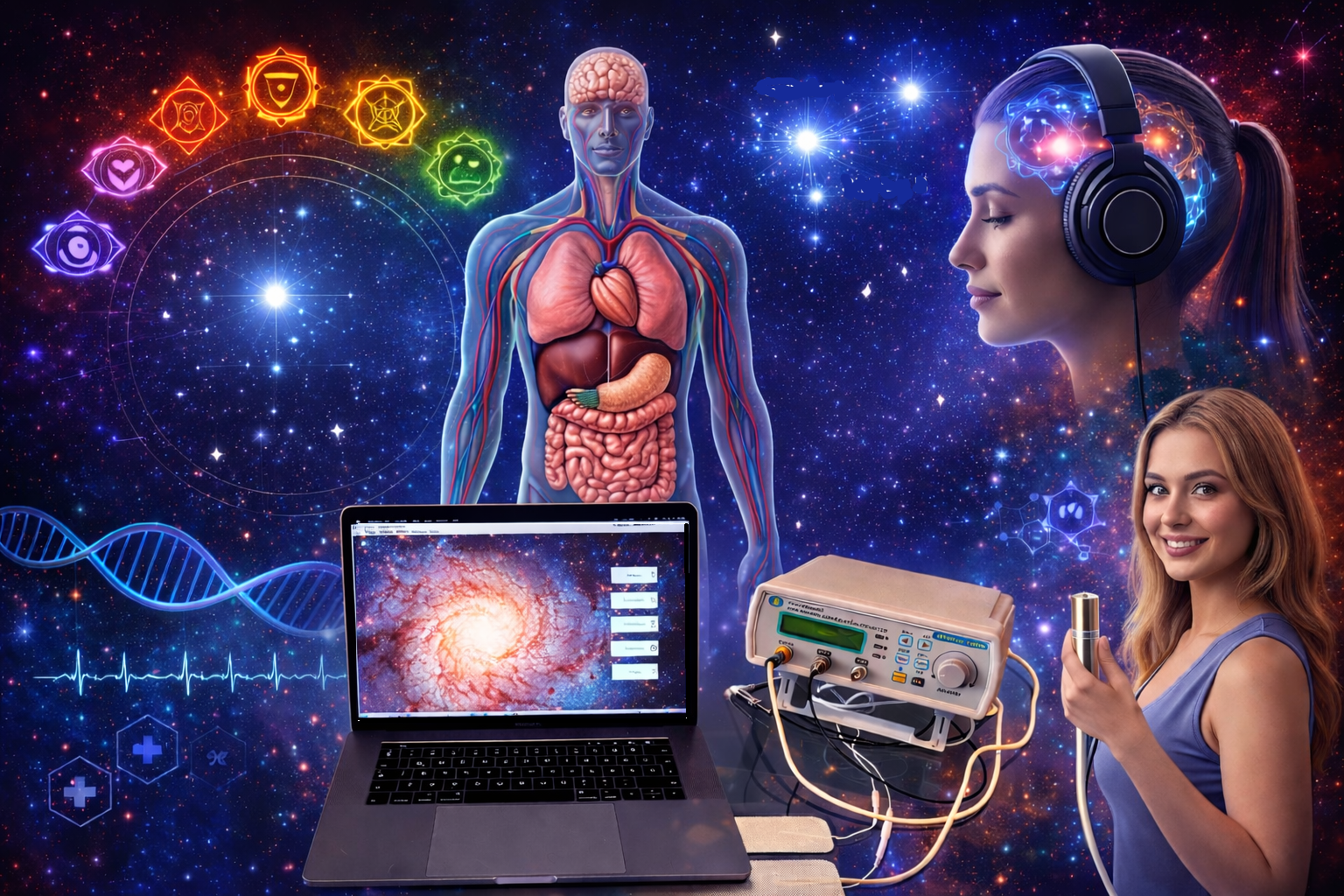
In addition to the core database, the system includes several energetic frequency collections, such as:
-
Energetic centers of the body (chakras)
-
Organ-related resonance frequencies
-
Vibrational patterns associated with homeopathic preparations
-
Binaural frequency generation
The database structure is open, allowing users to create, edit, and store custom frequencies and frequency lists.
Accessing Higher Frequencies – DDS Signal Generator Control
For generating higher and more precise frequency ranges, the software can control an external MHS DDS signal generator via USB connection.
This enables high-resolution frequency output and supports the execution of specialized frequency programs beyond standard audio-based limitations.
Biofeedback Functionality – Frequency Measurement and Comparison
The bioresonance–biofeedback module is capable of:
-
Measuring frequency-based feedback signals from the body
-
Comparing measured values with reference frequencies stored in the database
-
Creating customized frequency lists based on detected deviations
These personalized frequency sequences can then be transmitted back to the body in vibrational form, enabling an individualized energetic feedback (biofeedback) process.
Important Notice
The software presented on this website is not classified as a medical device. It is not intended to diagnose, treat, cure, or prevent any disease.
All usage is entirely at the user’s own responsibility.
